Why European Cars Need Different Service Intervals (And What Happens When You Ignore Them)
Published
If you own a European car, understanding the correct service intervals is one of the most important things you can do to protect your investment. The engineering is tighter, the performance is sharper, and the technology is more advanced. But that precision comes with a trade-off: European cars are completely unforgiving when it comes to neglected maintenance.
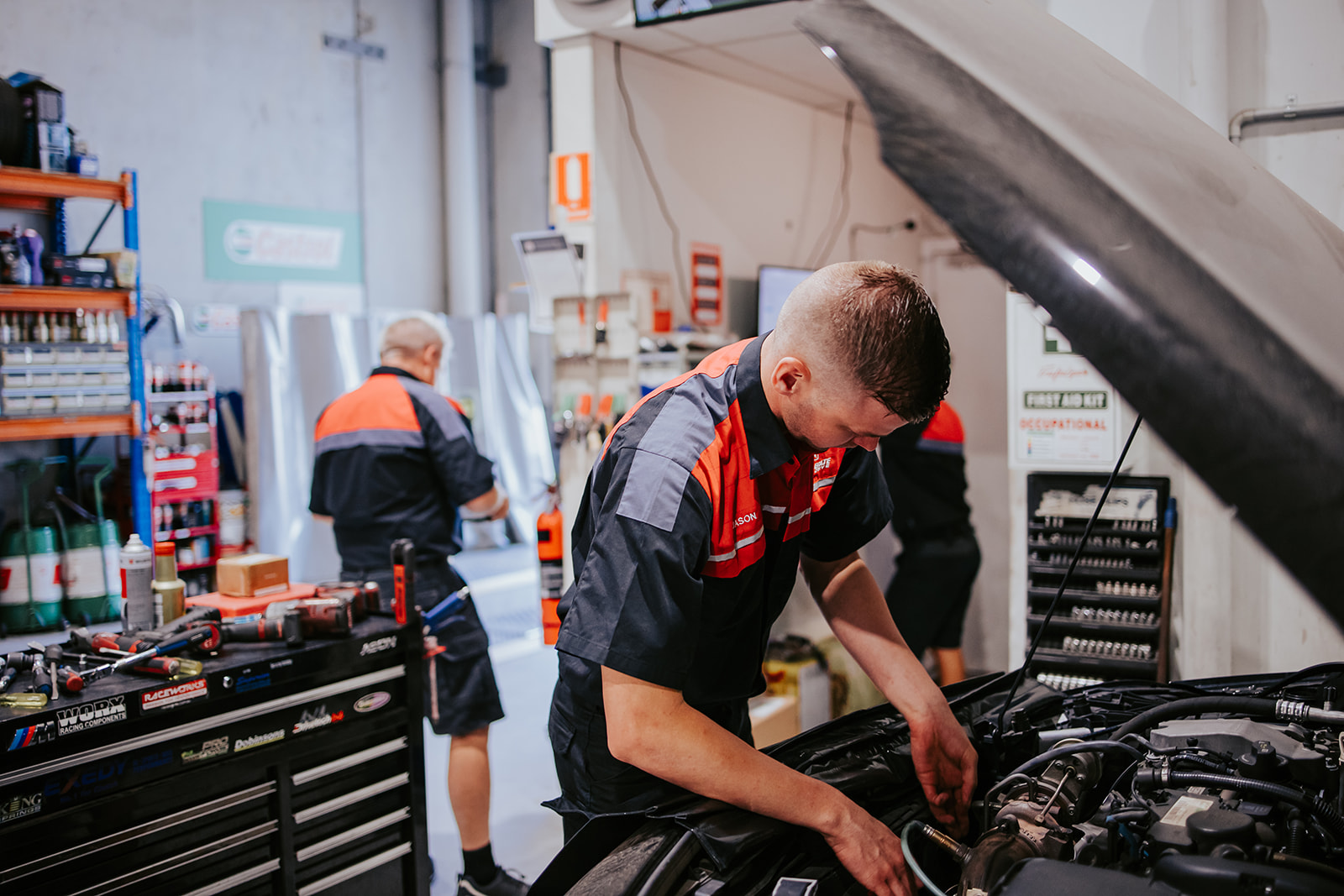
At Accelerate Automotive, we specialise in BMW, Mercedes, Audi, Porsche, Volvo, and VW. Every week, we see the real-world consequences of skipped services and incorrect fluid choices. We are not here to lecture, but we do want to explain why European car service intervals matter, what fluids your car actually needs, and what we find in the workshop when those intervals are ignored.
The Myth of the "Lifetime" Fluid
One of the most dangerous ideas in modern automotive maintenance is the concept of the "lifetime" fluid. Many manufacturers claim that certain fluids, particularly in transmissions and differentials, never need to be changed.
In reality, "lifetime" typically means the length of the manufacturer's warranty period. Once the car is out of warranty, that degraded fluid becomes your problem. Heat, friction, and moisture break down every fluid over time. If you want your European car to last beyond 100,000 kilometres without major component failure, you need to look past the marketing and stick to a preventative service schedule.
Essential Fluid Types and Specifications for European Cars
European vehicles require highly specific fluids. Using the wrong oil or transmission fluid in a modern BMW or Audi is a fast track to an expensive repair bill. The European Automobile Manufacturers Association (ACEA) publishes the oil sequences that underpin most European manufacturer approvals, and these specifications are far more detailed and stringent than the general API standards used for domestic vehicles. Here is what you need to know about the fluids keeping your car alive.
Engine Oil: Viscosity and Approvals
European engines run hotter and under higher compression than most domestic vehicles, particularly the turbocharged models common across VW, Audi, and Porsche. They require fully synthetic oils with specific manufacturer approvals, not just a matching viscosity grade off the shelf.
| Brand | Key Oil Specification | Notes |
|---|---|---|
| BMW | LL-01, LL-04, LL-17 FE | LL-04 is critical for diesel particulate filter (DPF) models |
| Mercedes-Benz | MB 229.5, MB 229.51, MB 229.52 | 229.51 and 229.52 required for diesel and DPF-equipped engines |
| VW / Audi | VW 504.00 / 507.00 | 507.00 required for DSG and DPF-equipped models |
| Porsche | A40 (older models) / C30, C40 (newer models with DPF) | A40 is a 0W-40 or 5W-40 for naturally aspirated and older turbocharged engines; C30/C40 required for DPF-equipped models (Macan, Panamera, 992 generation). Using A40 where C30/C40 is specified can damage the particulate filter |
| Volvo | VCC RBS0-2AE (0W-20) | Required for Drive-E engines; variable valve timing is sensitive to incorrect viscosity |
Using an oil that does not carry the correct manufacturer approval can void your warranty and, more importantly, cause real damage. At Accelerate Automotive, we use and recommend Liqui-Moly products across our European servicing work. Liqui-Moly is a German brand with a long-standing reputation in the European automotive trade, and their range is specifically formulated to meet the exact OEM approvals listed above. If you are unsure which specification applies to your vehicle, the Liqui-Moly Oil Guide allows you to look up the correct product by make, model, and year.
Brake Fluid: The 2-Year Rule
Brake fluid is hygroscopic, meaning it absorbs moisture from the air over time. European cars have highly sophisticated ABS and Electronic Stability Control (ESC) systems with precision valves that are extremely sensitive to corrosion caused by water-contaminated fluid. We use Castrol brake fluid in all our European services, formulated to meet the DOT 4 and DOT 4 Plus specifications required by BMW, Mercedes, Audi, and Porsche.
For almost all European brands, brake fluid must be flushed and replaced every 2 years or 30,000 to 40,000 kilometres, regardless of how much you drive. We frequently see expensive ABS pump failures that trace back entirely to brake fluid that has not been changed in four or five years.
DSG and ZF Transmission Fluids
The rapid, seamless shifts of a VW/Audi DSG (Direct-Shift Gearbox) or a BMW/Audi ZF 8-speed automatic rely on clean hydraulic fluid and a functioning filter.
VW and Audi DSG fluid and filter services are due every 60,000 kilometres. Skipping this leads to harsh shifting, clutch pack wear, and eventual mechatronic unit failure, which is a repair that can run into thousands of dollars. For ZF automatic transmissions found in BMW, Audi, and Porsche, ZF themselves recommend a fluid and filter change every 80,000 to 120,000 kilometres to prevent shift flares and internal wear, despite some manufacturers' "lifetime" claims.
Differential and Haldex Fluids
If you drive an all-wheel-drive European car, such as a VW Golf R, Audi quattro, or AWD Volvo, you have specialised driveline fluids that are often overlooked during a standard service.
Haldex AWD Systems (VW, Audi, Volvo): The Haldex clutch engages the rear wheels when traction is lost. The fluid in this system degrades rapidly and should be changed every 3 years or 45,000 kilometres. Critically, the pump filter must be cleaned during this service, as a blocked filter screen can leave the car operating in front-wheel drive only. Workshop example: Golf Rs and Audi S3s regularly arrive at our workshop with failed Haldex pumps because the fluid has turned to sludge and blocked the filter. This is entirely preventable with routine servicing.
Differentials (BMW M-series, Porsche, Mercedes AMG): High-performance differentials require specific gear oils, often with limited-slip friction modifiers. These should generally be serviced every 60,000 to 80,000 kilometres.
Engine Coolant
European cars often use complex cooling systems with electronic water pumps and plastic housings that become brittle over time. Coolant does not just prevent freezing and boiling; it contains anti-corrosion additives that protect the engine block, aluminium components, and heater core. Coolant should be flushed every 3 to 5 years, using the exact specification required by the manufacturer (such as G12 or G13 for VW and Audi). Liqui-Moly's Kuhlerfrostschutz KFS 2000 and radiator flush products are part of our standard cooling system service, ensuring the correct inhibitor chemistry is restored with every flush.
What Happens When You Skip a Service?
When a European car is neglected, the consequences are rarely minor. Here are some of the things we see regularly at Accelerate Automotive when service intervals are stretched too far.
The Sludged Engine: A European engine pushed 15,000 kilometres past its oil change interval does not just have dirty oil. The oil breaks down into a thick, abrasive sludge that blocks the tiny passages feeding the turbocharger and variable valve timing solenoids. Workshop example: We have seen late-model Audis arrive with stretched timing chains and failed tensioners. The root cause in each case was extended oil change intervals that starved the hydraulic chain tensioner of adequate oil pressure.
The "Lifetime" Transmission Failure: When DSG or ZF transmission fluid is left in the car for 150,000 kilometres, it fills with microscopic metal shavings from the clutch packs. This abrasive fluid destroys the delicate solenoids in the valve body. What should have been a routine fluid service turns into a transmission rebuild.
The Cooling System Catastrophe: Ignoring coolant flushes allows the anti-corrosion additives to deplete. We regularly see BMWs and Porsches where internal coolant passages have corroded, or plastic water pump impellers have shattered due to degraded coolant, leading to sudden engine overheating and serious damage.
The Accelerate Automotive Approach
European cars reward the workshops that understand them, and they punish the owners who neglect them. A standard service at a non-European specialist workshop may cover the basics, but it will rarely account for the brand-specific fluid approvals, DSG service schedules, Haldex systems, or the diagnostic software required to properly assess a modern BMW or Mercedes.
When you bring your car to Accelerate Automotive, a full service covers:
- Engine oil and filter replacement using exact manufacturer-approved synthetic oils
- A comprehensive brake inspection and moisture test of the brake fluid
- A check of all driveline fluids, including Haldex, DSG, and differentials, where applicable
- Air and cabin filter inspection
- A full safety and diagnostic scan using European-specific software
We catch the small stuff before it becomes the big stuff. If your European car is due for a service, or if you are not quite sure when the brake fluid or Haldex system was last touched, now is a good time to get it checked by the specialists.
Book your European service at Accelerate Automotive today.
FAQ: Your Questions Answered
Accelerate Automotive is Brisbane's southside European specialist, proudly servicing BMW, Mercedes, Audi, Porsche, and VW from our workshop in Coopers Plains.



 07 2143 8047